

Forum
For Royal Enfield owners and enthusiasts



By Wolffman - Fri Oct 16, 2020 10:48 pm
- Fri Oct 16, 2020 10:48 pm
#93581
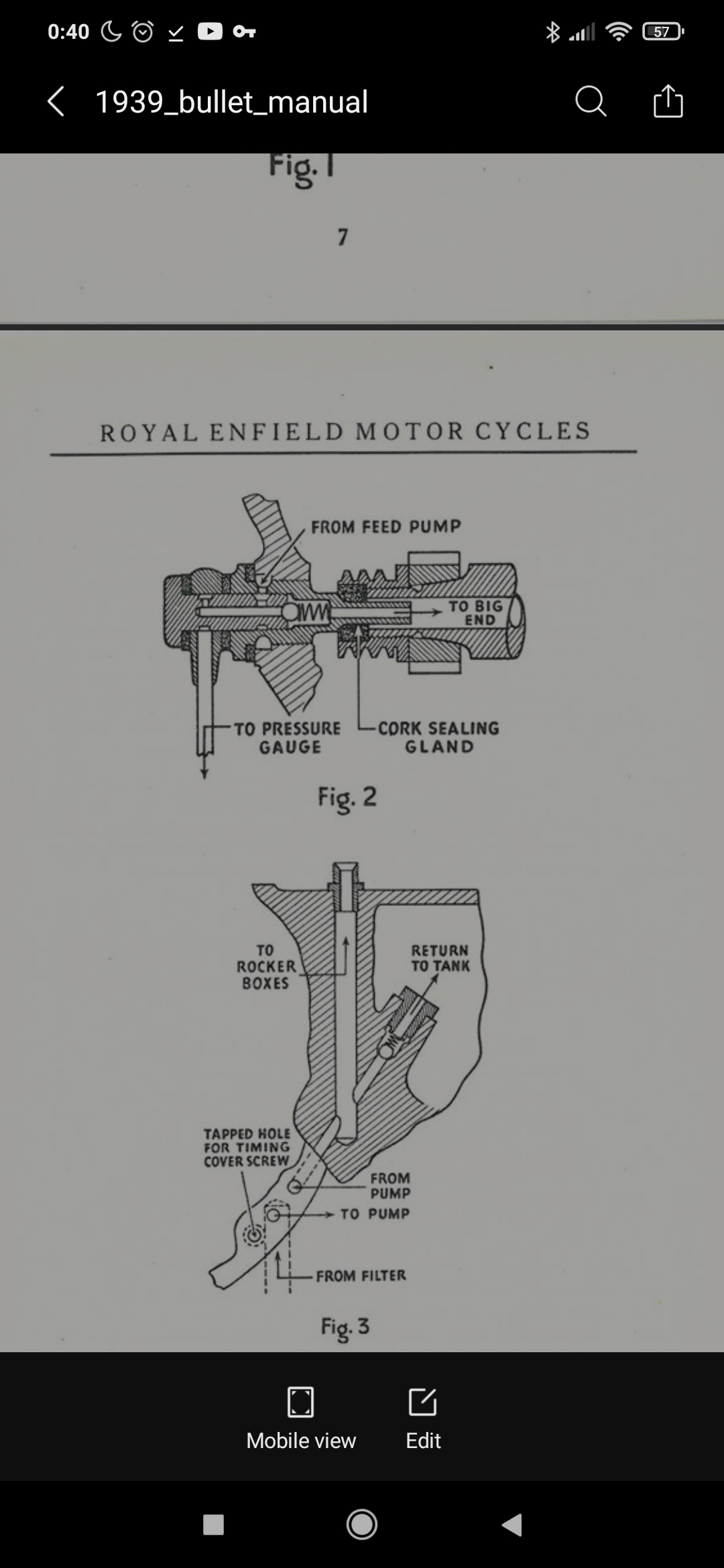 Screenshot_2020-10-17-00-40-13-420_cn.wps.xiaomi.abroad.lite.jpg (388.96 KiB) Viewed 1860 times
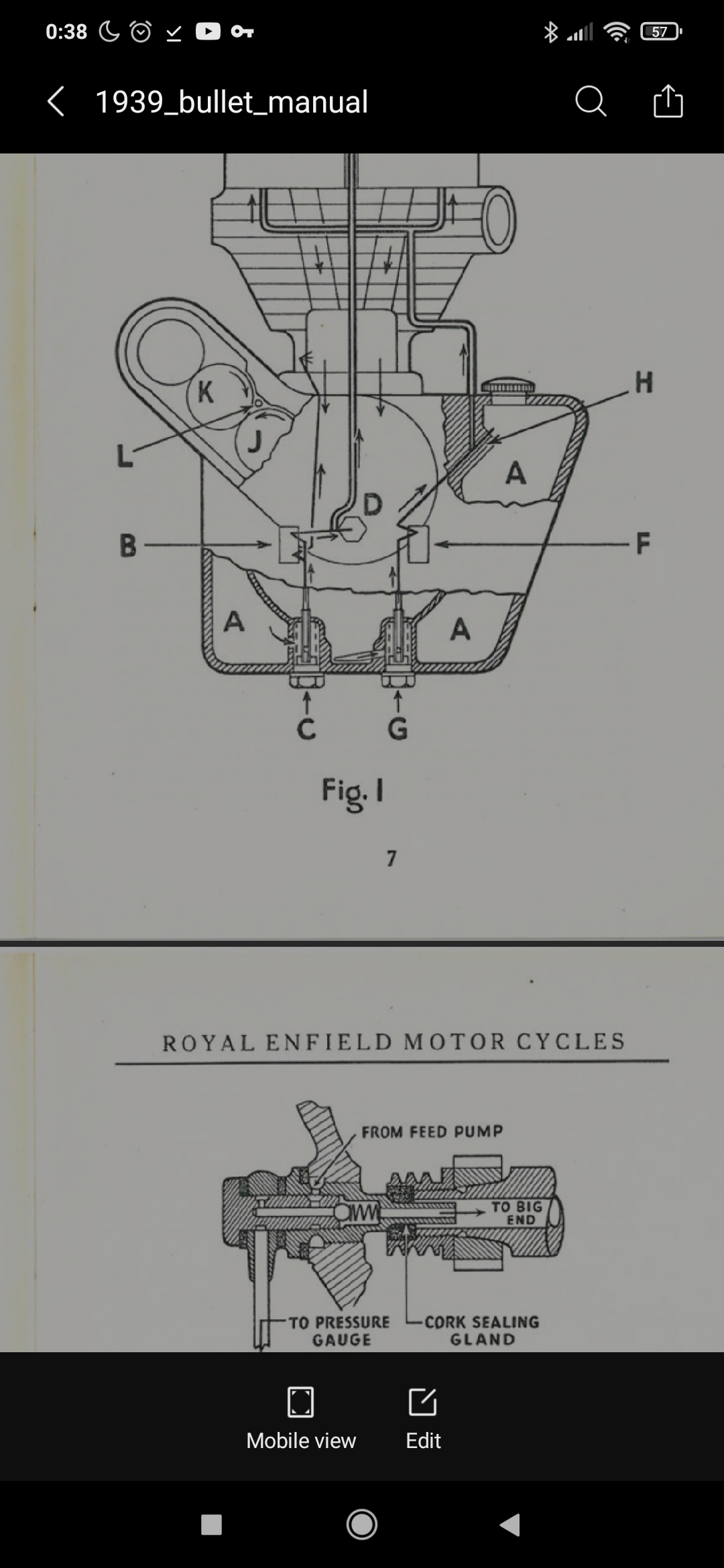 Screenshot_2020-10-17-00-38-10-950_cn.wps.xiaomi.abroad.lite.jpg (495.49 KiB) Viewed 1860 times
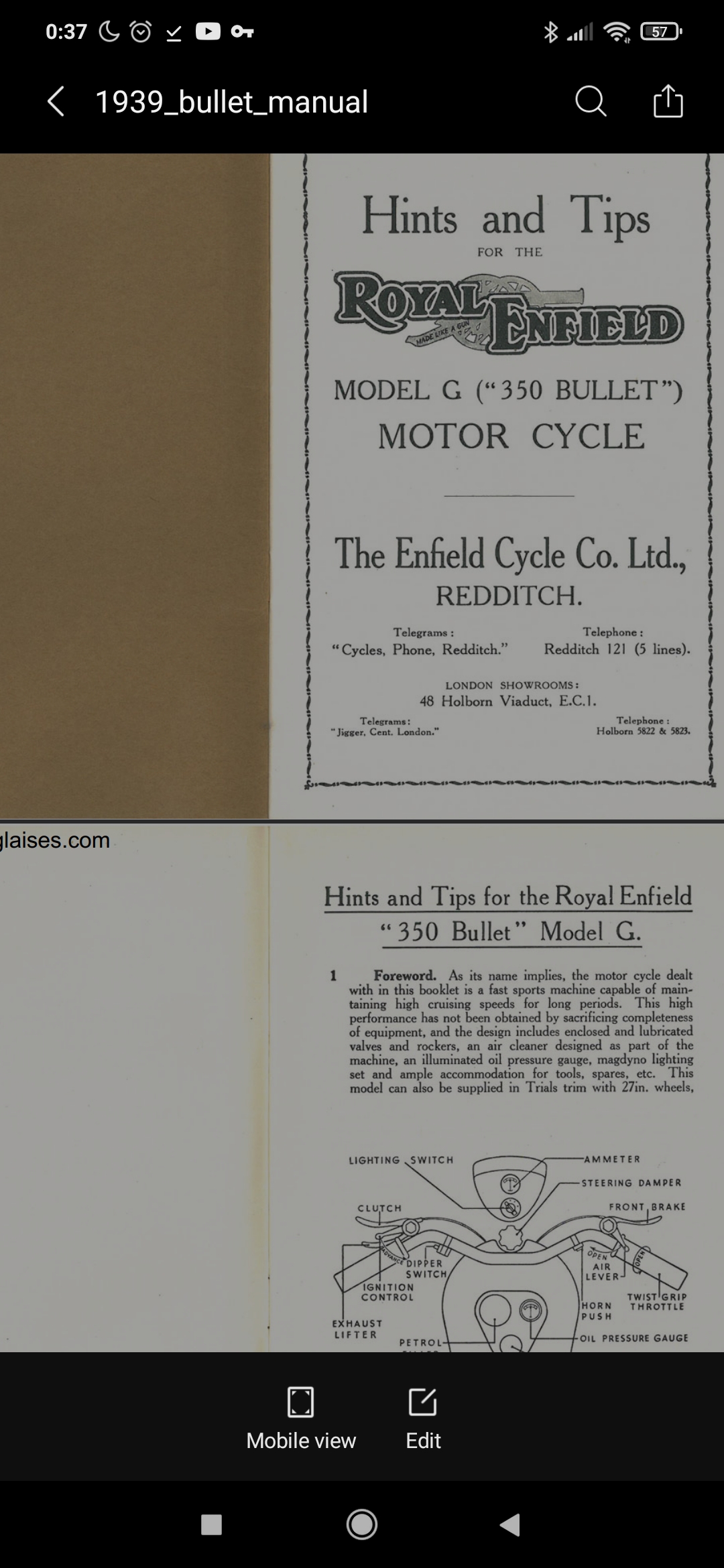 Screenshot_2020-10-17-00-37-36-986_cn.wps.xiaomi.abroad.lite.jpg (696.19 KiB) Viewed 1860 times
I could find in a Enfield manual from 1939 the exact part, but no part number in a book, maybe somebody knows thx clemens
Attachments

By Adrian - Sat Oct 17, 2020 12:31 pm
- Sat Oct 17, 2020 12:31 pm
#93585
Ah, now these drawings make things much clearer. It is worth noting that our hosts do have some unlisted stock in their warehouse, the part you need is is probably unobtanium, but you might be lucky.
As a temporary measure you could plug the threaded hole used by the banjo bolt with a plain threaded set screw, you just need to identify the diameter if the banjo bolt in fractions of an inch (e.g. 5/16 or 3/8) and then count the number of threads per inch to see if it is BSP(P), BSF or BSC thread. From your previous photo it looks to be somewhere in the region of 5/16" diameter. A specialist bolt supplier in the UK, or maybe our hosts might have a bolt the right size on the shelf which can be machined to serve as a replacement banjo bolt.
A.
As a temporary measure you could plug the threaded hole used by the banjo bolt with a plain threaded set screw, you just need to identify the diameter if the banjo bolt in fractions of an inch (e.g. 5/16 or 3/8) and then count the number of threads per inch to see if it is BSP(P), BSF or BSC thread. From your previous photo it looks to be somewhere in the region of 5/16" diameter. A specialist bolt supplier in the UK, or maybe our hosts might have a bolt the right size on the shelf which can be machined to serve as a replacement banjo bolt.
A.
- Sat Oct 17, 2020 4:58 pm
#93591
I've had another look at your photos, I'm pretty certain that the banjo bolt is 5/16" diameter, your vernier caliper reading of 0.3" is pretty close, 5/16 expressed as a decimal is 0.3125". Allow a slight reduction for machining and/or wear.
The thread looks quite fine, so given when and where it was made , I would bet that is British Cycle Thread @ 26 threads per inch. That is ALMOST the same as the metric fine thread of 1mm pitch, at least for measuring purposes.
If you cannot find an exact replacement, you could try the following.
Buy a M8 bolt with a long un-threaded section, e.g. M8 x 100.
5/16" = 7.953mm, which is very close. Cut the metric threaded section off the end and re-thread to the correct length with a 5/16" die (cycle thread taps and dies are still available in the UK, assuming that is the thread on the original). You will still have to bore out the centre of the bolt in a lathe, cut the oil grooves, etc.
If the original banjo bolt was too fragile an item, that could be a reason why it was discontinued on later models, though as has already been suggested, it is not really necessary on these bikes and is therefore just something else to go wrong.
A.
The thread looks quite fine, so given when and where it was made , I would bet that is British Cycle Thread @ 26 threads per inch. That is ALMOST the same as the metric fine thread of 1mm pitch, at least for measuring purposes.
If you cannot find an exact replacement, you could try the following.
Buy a M8 bolt with a long un-threaded section, e.g. M8 x 100.
5/16" = 7.953mm, which is very close. Cut the metric threaded section off the end and re-thread to the correct length with a 5/16" die (cycle thread taps and dies are still available in the UK, assuming that is the thread on the original). You will still have to bore out the centre of the bolt in a lathe, cut the oil grooves, etc.
If the original banjo bolt was too fragile an item, that could be a reason why it was discontinued on later models, though as has already been suggested, it is not really necessary on these bikes and is therefore just something else to go wrong.
A.
By Wolffman - Sat Oct 17, 2020 7:20 pm
- Sat Oct 17, 2020 7:20 pm
#93597
Hi Adrian,
thanks again, just let 2 ballons fly, one is the message to ths host amd second similar to your post to replica a new one outof sthg similar.
Btw. Do youkknow what exactly the ball with the spring,iis it needed to hold the oil in place and does the later ones of this plugs have this also inzids?
Cheers
Clemens
thanks again, just let 2 ballons fly, one is the message to ths host amd second similar to your post to replica a new one outof sthg similar.
Btw. Do youkknow what exactly the ball with the spring,iis it needed to hold the oil in place and does the later ones of this plugs have this also inzids?
Cheers
Clemens
- Sat Oct 17, 2020 9:00 pm
#93599
That does look like a non-return valve on the oil feed to the crankshaft, but it would also stop excess oil draining out into the crankcase when the engine is stopped with the crank at bottom dead centre, the so-called wet sumping which results in thick clouds of oily white smoke when the engine starts up. The smoke usually clears once the scavenge oil pump clears the excess oil from the crankcase. Redditch built Bullets also have a non-return valve on the scavenge side for the oil feed pipe to the rockers. This is not to be confused with the pressure release valve fitted to the crankshafts on some Bullets.
As far as I know the ball and spring in not a standard fitting on the Bullet, but the oil feed plug on my Big Head Bullet was modified by Bullet Whisperer to include them to prevent wet-sumping.
A.
As far as I know the ball and spring in not a standard fitting on the Bullet, but the oil feed plug on my Big Head Bullet was modified by Bullet Whisperer to include them to prevent wet-sumping.
A.
By Bullet Whisperer - Sun Oct 18, 2020 9:54 am
- Sun Oct 18, 2020 9:54 am
#93605
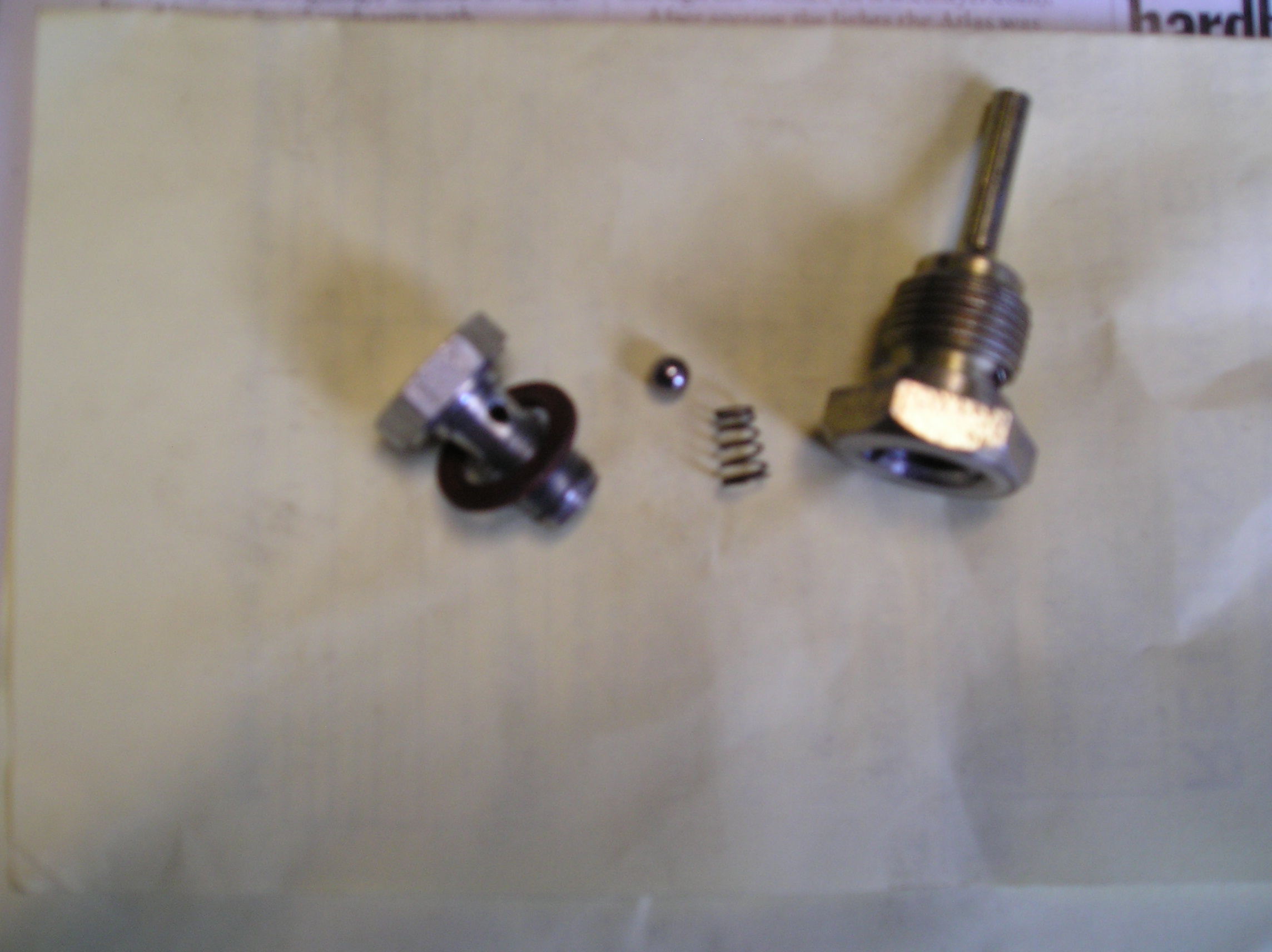 RE Anti wet sump 4.JPG (689.88 KiB) Viewed 1833 times
Adrian wrote: ↑Sat Oct 17, 2020 9:00 pmThat does look like a non-return valve on the oil feed to the crankshaft, but it would also stop excess oil draining out into the crankcase when the engine is stopped with the crank at bottom dead centre, the so-called wet sumping which results in thick clouds of oily white smoke when the engine starts up. The smoke usually clears once the scavenge oil pump clears the excess oil from the crankcase. Redditch built Bullets also have a non-return valve on the scavenge side for the oil feed pipe to the rockers. This is not to be confused with the pressure release valve fitted to the crankshafts on some Bullets.
As far as I know the ball and spring in not a standard fitting on the Bullet, but the oil feed plug on my Big Head Bullet was modified by Bullet Whisperer to include them to prevent wet-sumping.
A.
That does look a lot like my 'invention'. The ball and spring would probably create more pressure than a roller big end, and I would think they would be responsible for any pressure recorded by a gauge - a largely similar [in function but not appearance] layout can be found on Ariel singles from a similar era.
Attachments
By Adrian - Mon Oct 19, 2020 11:44 am
- Mon Oct 19, 2020 11:44 am
#93614
I think the problem here is caused by the design of the banjo fixing on the oil pipe to the oil pressure gauge. Unlike more modern banjo fittings with a groove machined on the inside of them to allow oil to circulate, it's just a ring with a hole on one side and the pipe fixed in line with the hole. These means the oil grooves have to be cut into the bolt, which is further weakening it, it has already lost strength by the drilling of a central and a couple of radial oil ways.
Maybe replacing the old banjo fitting with a more modern type will allow you to fit a less fragile replacement bolt.
A.
Maybe replacing the old banjo fitting with a more modern type will allow you to fit a less fragile replacement bolt.
A.
Shop for accessories at Hitchcocks Motorcycles