This Forum is now CLOSED use the link to get more details viewtopic.php?f=3&t=13924#p102587
By Lennie
#48680
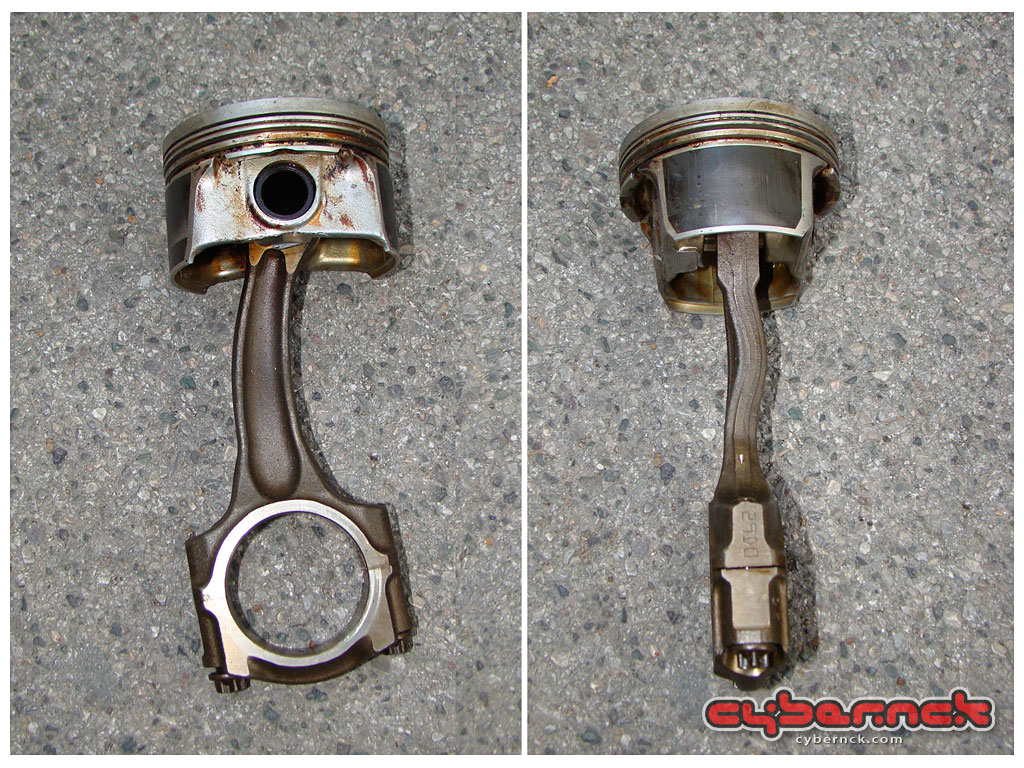
I hear what you say Presto, but that comment came from someone who is well known in the world of Enfields and does much work on the engines, furthermore, I have obtained a good number of spares recently among the spares I have amassed, are a further two 500 Cranks, both with snapped rods.

People ask advice of others based upon their exprience, they can take it or leave it...others may choose to poo poo it because they haven't sufferred the same problem..... yet. I now have 3 snapped rods in my garage, I do not know the history of two of them, but I know the history of the third.

When my rod 'let go' it was a frightning experience, it punched a hole in the crank case and the top of the oil tank, I'm not saying it will happen to all, but since mine went I have become aware of similar failures, which I believe is a pattern or perhaps its just a series on coincidences.
User avatar
By Presto
#48681
I stand by my remarks. Sure, if a con-rod breaks it does huge damage. But it’s rare for a 500 Bullet to break a con-rod. Of course the only people likely to comment on this will be the (few!) who've had one break – not the 10,000s who have not! If you’ve had three rods go it seems there’s something very odd going on with your engines!
User avatar
By Presto
#48683
If I may comment again (!) - they don't 'usually' bend - they 'usually' stay in one piece! ;-)
By papasmurf
#48684
By usually I meant when they fail they usually bend. A catastrophic failure like snapping in two is most likely a manufacturing fault leaving brittleness. Usually you can twist a con-rod several times until it looks like art work before it will snap.
User avatar
By Chris Tindal
#48685
At the end of the day, if you want a 500 bullet Uganda Dave, get one and enjoy it. I love mine and even give it some welly sometimes. I'm going down to the REOC International on it in a couple of weeks, which is a 400 mile round trip, if it blows it blows, life's short, have fun;-)
By Bullet Whisperer
#48690
We had a Redditch 500 conrod break once. This conrod was probably over 50 years old to be fair, but 6000 rpm took it out. It broke just below the small end in our case and luckily the remaing part was long enough to slide up and down the barrel until the engine coasted to a halt, so most of the rest of it remained in good shape. Indian alloy conrods are not so pretty - they look like they have been cut out using a jigsaw, so I wouldn't want to rev one of them too hard for too long, although I decapitated an Indian 500 piston once, while the conrod remained in one piece. I also did some calculations once and for a 350 to put the same strain on a conrod as a 500 doing 6000 rpm, the 350 would have to be hitting 8700 rpm. A 500 conrod is no weaker, but more likely to fail for this reason. If you rev a 500 hard enough for long enough, the conrod will probably break sooner or later, but that doesn't mean they are going bang all over the place. Don't over rev and things should be fine. Don't under rev and slog either, because that's nearly as bad [story about that possibly coming soon]. Cheers, Paul.
By Bullet Whisperer
#48691
Missed out in the 350 / 500 revs comparison re. breaking conrods - it is the extra piston weight of the 500 over the 350 that puts the extra strain on the conrod and this is where a 350 would have to hit 8700 rpm to match the strain a 500 will impose on a conrod at 6000 rpm.
By Lennie
#48692
Quote "Usually you can twist a con-rod several times until it looks like art work before it will snap..."

Only when relatively new, once an Aluminium rod has 'work hardened' it will not twist or bend. It will fracture.
User avatar
By Presto
#48693
Here we go again (!). The factor by which stresses increase with RMP is staggering! The maths indicate that an engine running at 11,000 rpm is subjected to around 3 times as much fatigue damage as when run at 10,000 rpm – a 3 fold increase in fatigue damage with only 1/10th increase in rpm. 3,000 rpm could be regarded as a ‘sensible’ engine speed for a Bullet with a road speed of around 50 mph in fourth gear. A gentle tweak on the throttle will take the engine speed to 4,000 rpm, not high by any standard. That small (1.35 times) increase in engine speed subjects the engine to a 13 times greater level of fatigue damage compared with 3,000. Rising to 5,000 rpm means 201 times increase in fatigue damage. Fatigue damage increases 1,024 times when engine speed rises from 3,000 rpm to 6,000 rpm; from 3,000 rpm to 7,000 rpm stress fatigue increases 4,000 times. No wonder ‘over-revving’ damages engines!

Shop for accessories at Hitchcocks Motorcycles